
When people hear the term visual strategy, they often think about colors, typography, photography, layouts, moodboards, or making a campaign look more consistent. These are all part of the visual process, but they are not the strategy itself. Visual strategy goes deeper. It is the intentional process of deciding how a brand should visually communicate its ideas, position, personality, and purpose to the people it wants to reach.
Today people are constantly exposed to content, brands can no longer rely on simply being visually appealing. A beautiful image may get attention, but attention alone does not create connection. A well-designed campaign may look polished, but if the audience does not understand what the brand is saying, or if the visual experience does not support the larger business objective, then the design is only doing part of its job.

This is why I believe visual strategy should begin before the actual creation of visual content. Before we decide what something should look like, we need to understand what it needs to communicate, who needs to receive that message, and what we want that person to feel or do after experiencing it. The visual becomes more intentional when it is connected to a larger purpose.
For me, this is where strategy and creativity meet. Creativity gives us the ability to express an idea, but strategy gives that expression direction. Without direction, creativity can easily become a collection of beautiful things that do not necessarily work together. A brand may have excellent photography, strong graphic design, impressive video, and an active social media presence, yet still feel disconnected because every visual decision was made independently.
A strong visual strategy creates the relationship between those decisions. It asks how the photography supports the brand message, how the typography influences perception, how the composition directs attention, how the color system reinforces recognition, and how each visual touchpoint contributes to the overall experience of the audience. It considers not only what a brand looks like, but how that visual identity behaves when it enters the real world.
This distinction becomes especially important when developing marketing campaigns. A brand can have an established visual identity and a comprehensive set of brand guidelines, but that does not mean every campaign should simply repeat the same visual formula. Brand guidelines establish the foundation of the identity. Visual strategy determines how that identity should be interpreted for a particular objective, audience, platform, or moment.
A product launch, for example, may require a different visual emphasis from a thought-leadership campaign. A recruitment campaign may need to create a sense of belonging and human connection, while a premium service campaign may need to communicate authority, exclusivity, and trust. Both campaigns can belong to the same brand while expressing themselves differently. The goal is not to make every piece of content look identical. The goal is to make every expression feel intentional and unmistakably connected to the brand.
This is why I often look at visual communication as an ecosystem rather than a collection of individual assets. A social media post does not exist in isolation. It may lead someone to a website, a landing page, a product, an event, a conversation, or another piece of content. A photograph may appear on Instagram today and become part of a website, presentation, campaign, or editorial story tomorrow. When we understand these relationships early, we can create visuals that work together instead of simply producing more content for the sake of having something to publish.
The question then shifts from, “What should we create?” to “What does the audience need to experience?” That change in perspective is important. It allows us to think about the role of every visual touchpoint within the larger customer journey. Sometimes the right answer is photography. Sometimes it is motion. Sometimes it is a simple graphic, an illustration, a strong piece of typography, or even a visual system that allows the audience to navigate information more easily. The medium should follow the objective, not the other way around.
And this is where the emotional side of visual communication becomes important to me. I have always believed that people do not connect with brands purely because they understand them intellectually. They also respond to how a brand makes them feel. Before someone can articulate why a particular brand feels trustworthy, relevant, aspirational, familiar, or different, they may have already experienced that perception through its visual language.
A photograph can make a brand feel human. Typography can make it feel authoritative. Space can make it feel premium. Movement can make it feel energetic. A particular color or visual treatment can trigger recognition before the audience even reads the name. These responses are not accidents when they are approached strategically. They are part of the experience we are designing.
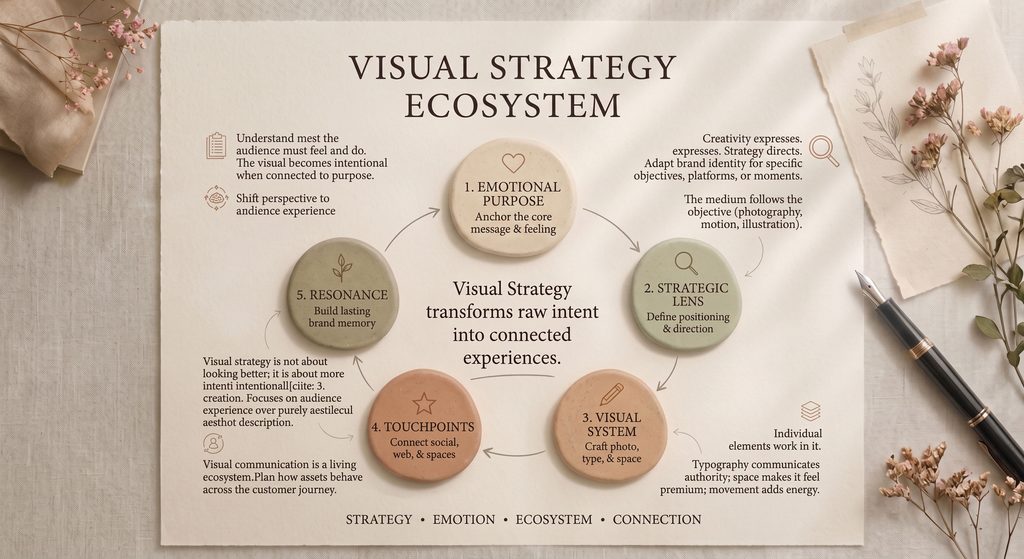
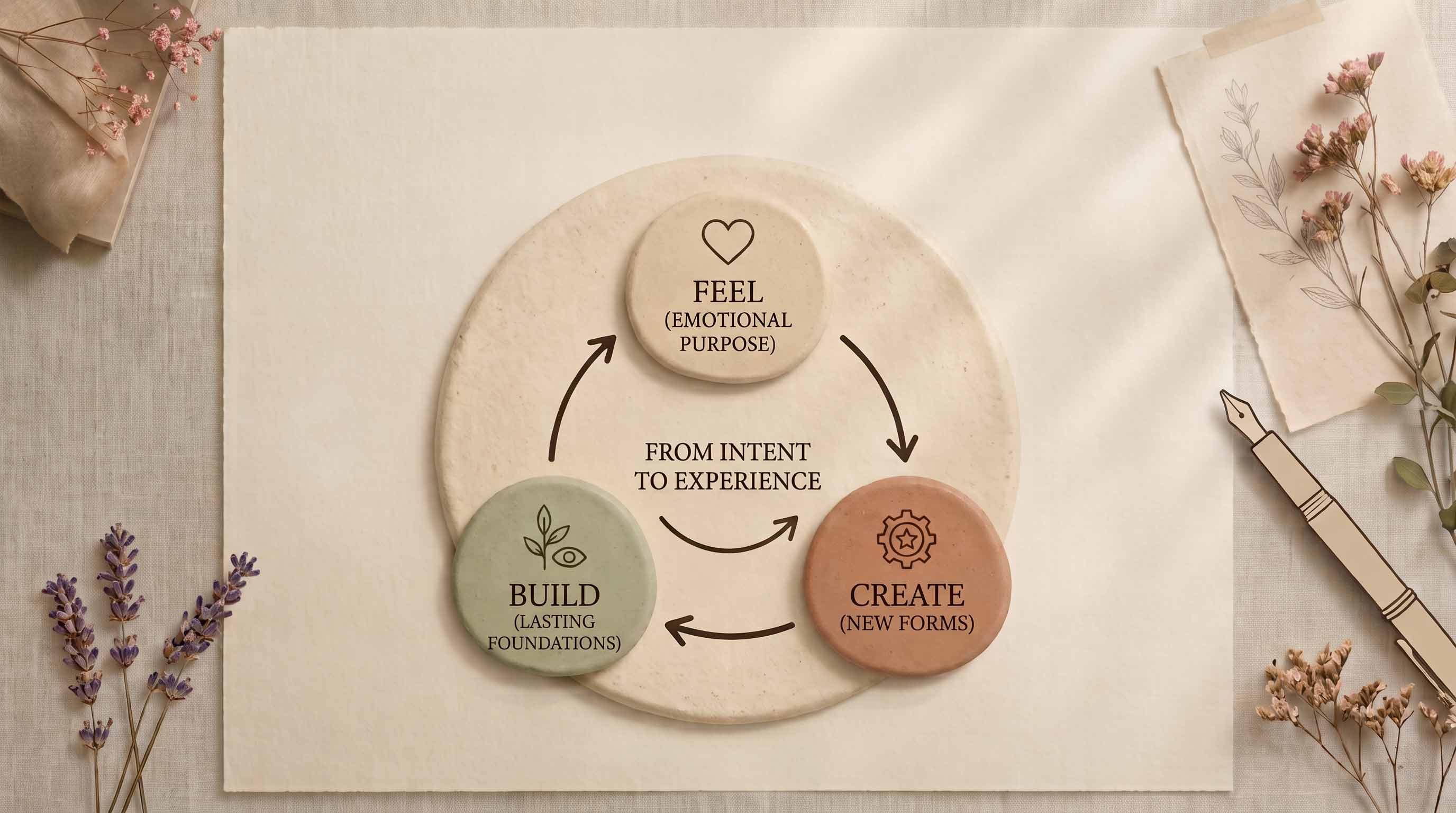
This is also why my philosophy of Feel to Create naturally connects with visual strategy. Feeling does not replace strategy, and it certainly does not mean creating based purely on instinct. It means understanding that emotion is part of the information we use when making creative decisions. Before we create something, we need to understand the experience we want to create. From there, we can make more deliberate decisions about the visual language that will bring that experience to life.

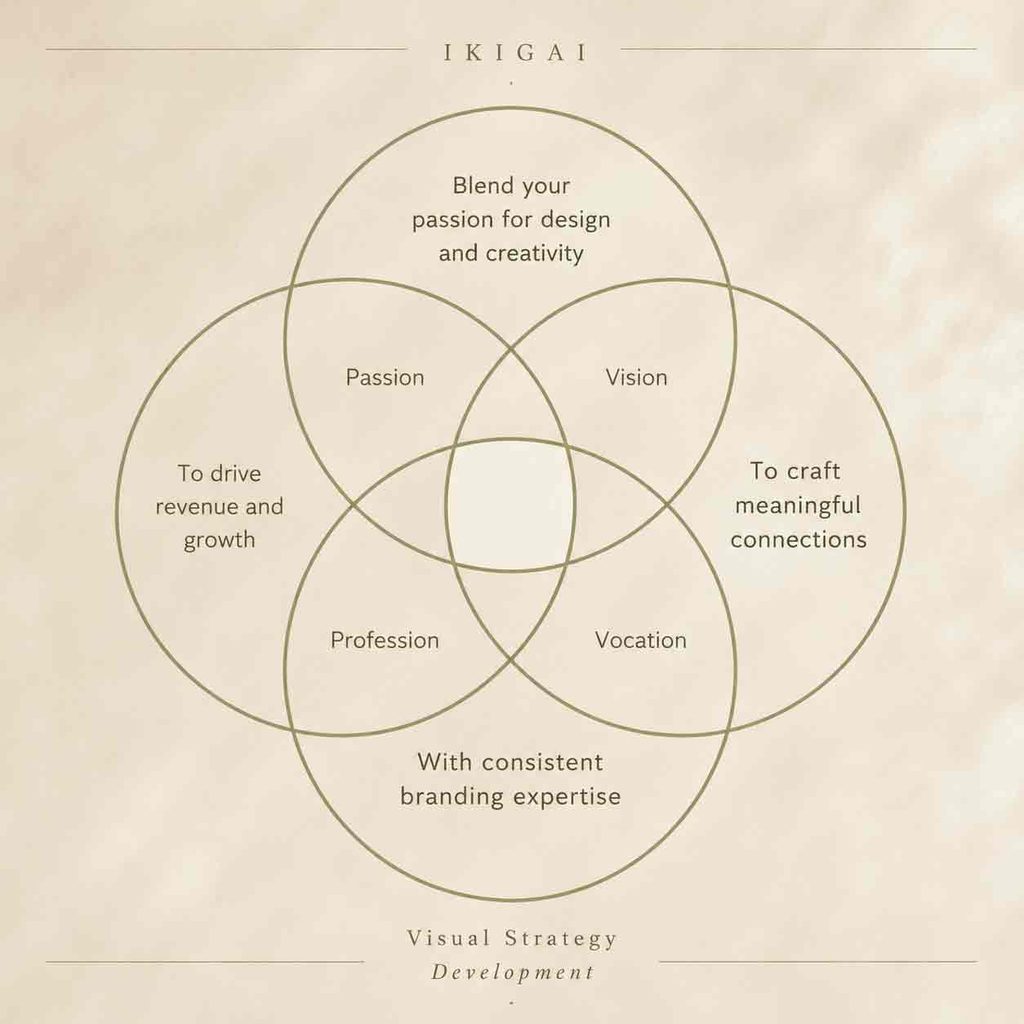
Ultimately, visual strategy is not about making a brand look better. It is about making the visual expression of a brand more intentional. It connects the brand’s purpose with its audience, its message with its creative expression, and its individual pieces of content with the larger experience people have with the brand.
When visual strategy is done well, the audience may never see the strategy itself. They simply experience a brand that feels cohesive, relevant, recognizable, and considered. They understand what the brand is trying to communicate, even when they cannot explain exactly how the visual system achieved it.
That, to me, is the real power of visual strategy.
It is not simply about what people see.
It is about what they understand, what they feel, and ultimately, what they remember.